Shaping Metal. Solving Problems.
ISO. NSF. ITAR.
You’ve probably seen those letters on manufacturing websites before. Maybe you’ve even been told to look for them when choosing a fabrication partner.
But what do they actually mean for your parts?
At Starflex Fabrication, certifications and compliance requirements aren’t just something we list on our website. They influence what happens before a job reaches the floor, while it’s moving through production, and before the finished parts leave our facility.
They help determine how we review customer requirements, control documents, verify materials, inspect parts, train employees, handle problems, and protect sensitive information.
ISO 9001:2015, NSF requirements, and ITAR compliance don’t all serve the same purpose. But they have something important in common.
They give our customers confidence that quality and compliance are built into the process from the beginning.
Quality Control in Manufacturing Starts Before We Make the First Part
Quality control in manufacturing isn’t just final inspection.
By the time a finished part reaches QC, a lot of decisions have already been made. The drawing has been reviewed. Material has been selected. Programs have been created. Employees have received production requirements. Parts may have already moved through several operations.
Good quality control starts much earlier.
At Starflex, we review customer drawings, specifications, tolerances, materials, finishing requirements, inspection requirements, and delivery expectations before production begins.
Once an order is accepted, those requirements are transferred into controlled production documents and communicated to the departments responsible for the work.
As the job moves through laser cutting, press brake forming, machining, welding, finishing, powder coating, assembly, inspection, and shipping, our team works from the applicable drawing, Router, work instructions, and inspection criteria.
The idea is simple: don’t wait until the end of a job to find out something went wrong.
First Article Inspection: Get It Right Before You Make the Rest
Imagine setting up a production run, making hundreds of parts, and only then discovering that something was off.
Wrong dimension. Wrong setup. Wrong revision.
Now one problem has become hundreds of problems.
That’s one reason first-piece verification and first article inspection are so valuable. Before continuing through a batch, the first part can be checked against the applicable drawing and requirements to make sure the process is producing what the customer ordered.
It’s an early checkpoint.
If something isn’t right, we want to know before the rest of the run follows it.
That helps reduce scrap and rework, but it also protects everything that comes next. An incorrectly cut part creates problems at the press brake. A bad bend creates problems in welding. Poor fit-up creates problems in assembly.
Quality travels downstream.
So do mistakes.
What Does It Mean to Be ISO 9001 Certified?
Starflex is ISO 9001:2015 certified, but what does that actually tell a customer?
ISO 9001:2015 is an internationally recognized standard for Quality Management Systems. It provides a framework for consistently meeting customer requirements, controlling processes, measuring performance, addressing risks, and continually improving.
What ISO doesn’t do is tell us exactly how to manufacture every part that comes through our doors.
Instead, it requires us to establish effective processes, follow those processes, maintain appropriate records, evaluate how those processes are performing, and address weaknesses when we find them.
For Starflex, our ISO 9001 Quality Management System touches areas such as:
- Contract and requirement review
- Document control
- Training and competency
- Equipment calibration
- Production controls
- Inspection procedures
- Traceability
- Control of nonconforming products
- Corrective action
- Internal audits
- Continuous improvement
Most customers will never see much of that work.
But they benefit from it every time they receive a part that was built to the correct revision, made from the specified material, inspected against the right requirements, and backed by the appropriate records.
Does ISO 9001 Certification Guarantee Zero Defects?
No.
Manufacturing doesn’t work that way, and ISO doesn’t pretend it does.
What an ISO 9001-certified quality system does is establish processes designed to prevent problems, identify them when they occur, keep questionable parts from moving forward without review, determine what happened, and take corrective action when necessary.
If an issue is found at Starflex, the affected product is controlled so it can’t unintentionally continue through production or reach the customer.
That’s an important distinction.
Quality isn’t pretending mistakes never happen.
It’s having a system for preventing as many as possible and dealing with the rest correctly.
What Does NSF Mean for Metal Fabrication?
If you’ve searched “what does NSF mean,” you’ve probably seen it associated with commercial kitchens, food-processing equipment, or other products where sanitation matters.
For metal fabrication, NSF-related requirements can affect much more than the material used to make a part.
Starflex manufactures stainless steel components and assemblies for food, beverage, dairy, packaging, and sanitary-equipment applications. Depending on the project, those requirements can influence:
- Material identification
- Weld quality
- Surface finish
- Cleanability
- Contamination prevention
- Grinding, blending, and polishing
- Drainability
- Post-fabrication cleaning or passivation when specified
Why does that matter?
A rough weld, difficult-to-clean crevice, or poorly finished surface may be more than a cosmetic problem in sanitary equipment. Areas where food residue, moisture, or contaminants can collect can create problems for the equipment manufacturer and ultimately the end user.
Starflex works on components ranging from frames, guards, enclosures, cabinets, tables, and equipment bases to hoppers, welded sanitary assemblies, and components used in filling and processing equipment.
The exact NSF requirements depend on the application.
And there’s an important distinction here: a component fabricated for food equipment isn’t automatically an “NSF-certified product.” Depending on the job, we may be manufacturing a component used in NSF-certified equipment or fabricating to sanitary requirements defined by our customer.
That’s why understanding the requirements before fabrication starts matters.
What Is ITAR Certification?
“ITAR certification” is a common search term, but ITAR is more accurately discussed in terms of registration and compliance.
ITAR, or the International Traffic in Arms Regulations, governs certain defense articles, defense services, and related technical data.
And unlike many quality requirements, ITAR isn’t just concerned with how a physical part is manufactured.
It can also affect how information about that part is handled.
For applicable work, ITAR requirements can involve:
- Access to controlled information
- Secure storage
- Controlled communications
- Employee awareness
- Supplier controls
- Visitor controls
- Documentation
- Customer confidentiality
That’s a different kind of protection.
A customer may send us drawings, specifications, models, or other technical information necessary to manufacture a defense-related component. Protecting the project means protecting both the part itself and the controlled information behind it.
For customers working in defense, that isn’t optional.
It’s part of the job.
Different Requirements. One Controlled Manufacturing Process.
ISO, NSF, and ITAR aren’t interchangeable.
ISO 9001:2015 provides the Quality Management System framework we use to control and continually improve our processes.
NSF-related requirements help address sanitation, cleanability, materials, and public-health considerations for applicable food and beverage equipment.
ITAR compliance addresses the protection of certain defense articles and controlled technical information.
Different industries. Different risks. Different requirements.
But look closer and you’ll find some common ground.
All three depend on discipline.
Clear requirements. Controlled documents. Trained employees. Appropriate records. Verification. Accountability.
That’s where quality and compliance stop being abstract ideas and start becoming part of the way a shop operates.
What Quality and Compliance Look Like on the Shop Floor
A quality system doesn’t do much good if it stays in the quality office.
It has to follow the work.
For a laser operator, that can mean verifying the correct material, thickness, program, drawing revision, and part identification.
At the press brake, it means using the proper tooling and bend sequence, checking dimensions and angles, and verifying the first piece before continuing.
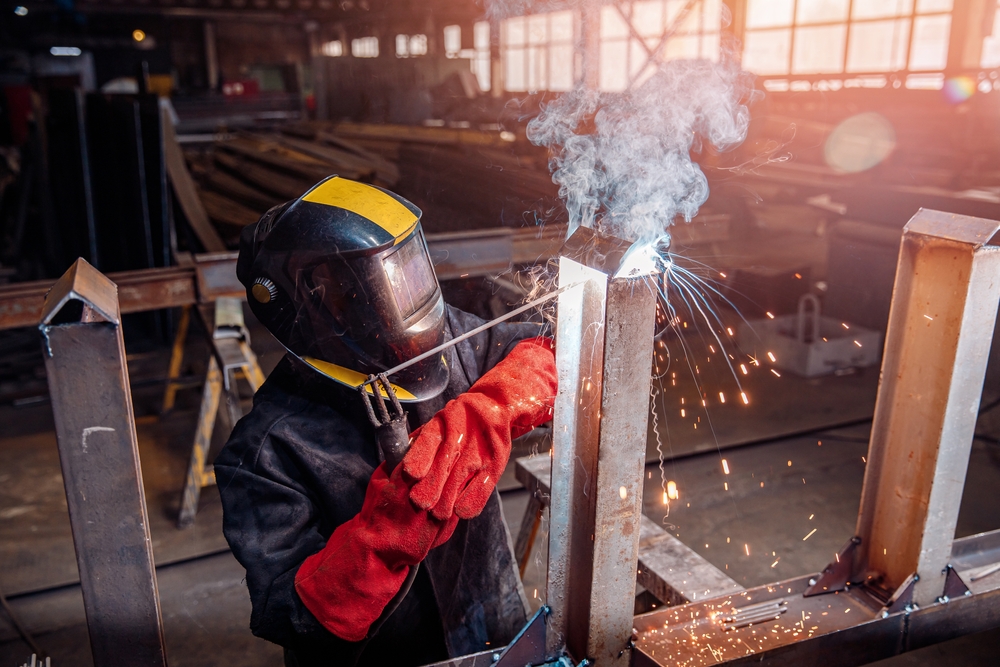
For a welder, it means working from the correct drawing, weld symbols, material requirements, and workmanship criteria.
In finishing, surface condition, contamination risks, and customer specifications have to be understood and controlled.
And throughout the process, inspectors verify applicable requirements and have the ability to stop questionable product from moving forward.
That’s what certification should look like in practice.
Not a certificate on the wall.
A process people actually follow.
The Certificate Doesn’t Build the Part. People Do.
Certifications provide structure, but they don’t replace good people or a strong culture.
We think both matter.
At Starflex, quality stays part of the daily conversation through employee training, Standard Work Instructions, morning production meetings, first-piece verification, quality checkpoints, internal audits, corrective-action reviews, management review, and ongoing performance measurement.
Employees are expected to speak up when something doesn’t look right.
We call it “Flag UP.”
If someone is unsure about a part, drawing, process, or requirement, we’d rather stop and ask the question than let a potential problem move to the next operation.
That’s an important part of how we look at certification.
The certificate verifies the system.
The culture determines how well that system works when the machines turn on in the morning.
What Manufacturing Certifications Mean for Our Customers
Most customers don’t come to Starflex because they’re excited about Routers, audit schedules, or document control.
They want good parts.
They want them when we said they’d get them.
And when their industry comes with additional requirements, they need a manufacturing partner capable of understanding and meeting them.
Strong quality and compliance systems help provide:
- More consistent quality
- Better documentation
- Greater traceability
- Reduced manufacturing risk
- Faster identification and resolution of problems
- Better communication
- Greater supply-chain confidence
- Support for customer and regulatory requirements
And that last point matters.
Our customers usually aren’t the end of the supply chain. They’re building equipment, assemblies, and finished products for someone else.
Their requirements become our requirements.
Their deadlines matter to their customers.
Their compliance obligations may depend, in part, on the work their suppliers perform.
We take that responsibility seriously.
Quality and Compliance Built Into the Process
ISO 9001:2015, NSF requirements, and ITAR compliance protect different things.
But their value ultimately comes down to what happens every day.
Requirements get reviewed.
Materials get verified.
Documents stay controlled.
Parts get inspected.
Sensitive information stays protected.
Problems get addressed.
Processes get improved.
That’s what customers should expect when they work with a manufacturer that takes certifications seriously.
At Starflex Fabrication, we believe quality, compliance, security, and accountability should be built into the process, not inspected in after the work is already done.
Shaping Metal. Meeting the Standard.
Whether your project calls for an ISO 9001 certified manufacturing partner, sanitary fabrication requirements, ITAR compliance, or simply a fabrication team with rigorous quality control, we’re ready to talk through what the job requires.
Contact Starflex Fabrication today to discuss your project and see how we put quality and compliance to work from the first drawing to the finished part.